
If you’ve ever stopped mid-sentence wondering whether to write patients or patient’s, you’re in good company. This tiny apostrophe trips up students, healthcare professionals, and everyday writers alike. The good news? The rule behind it is straightforward — and once it clicks, you’ll never second-guess yourself again.
This guide breaks down the difference between patients, patient’s, and patients’ with clear examples, a handy comparison table, and real-life sentences you can learn from right away.
Quick Answer – Simple and Clear
Here’s the core idea in one line:
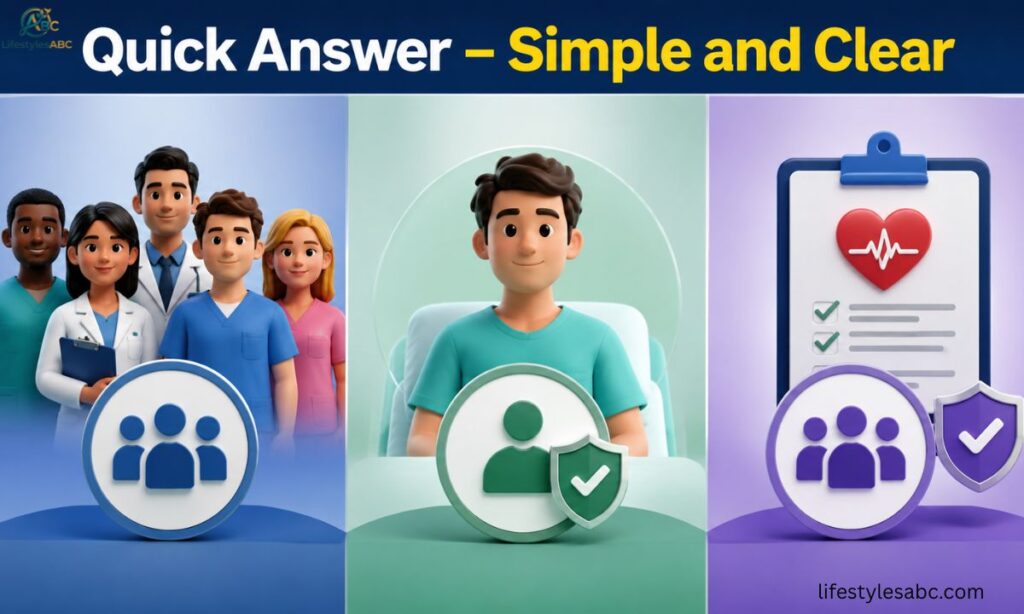
- Patients = more than one person receiving medical care (plural)
- Patient’s = something belonging to one patient (singular possessive)
- Patients’ = something belonging to multiple patients (plural possessive)
That apostrophe does all the heavy lifting. Without it, you’re talking about a group of people. Add it before the s, and you’re showing ownership.
Simple Origin and Background Explanation
The word patient traces back to the Latin patiens, meaning “one who suffers or endures.” It entered English through Old French and has been used as a medical noun since at least the 14th century.
In standard English grammar:
- Adding –s to a noun makes it plural → patients
- Adding ‘s to a noun makes it possessive → patient’s
There is no difference between American and British English here. Both follow the same rule, making this one of the more consistent grammar points across global English.
Patients’ vs Patient’s — What’s the Third Form?
Many people only know about two forms. There’s actually a third one that gets overlooked:
| Form | Type | Meaning |
| patients | Plural noun | More than one patient |
| patient’s | Singular possessive | Something belongs to one patient |
| patients’ | Plural possessive | Something belongs to multiple patients |
How patients’ works:
When the noun is already plural (patients) and you want to show possession, the apostrophe goes after the s, not before it.
- The patients’ records were updated. → Records belonging to multiple patients
- The patients’ rights must be protected. → Rights belonging to all patients
Clear Explanation of the Difference
Patients (Plural — No Apostrophe)
Use patients when you’re simply referring to more than one person receiving medical care. No ownership, no belonging — just a group of people.
Examples:
- The waiting room was full of patients.
- Doctors treat hundreds of patients every week.
- Patients must sign the consent form at the front desk.
- The hospital discharged several patients this morning.
Quick check: If you can replace the word with “people receiving care,” use patients.
Patient’s (Singular Possessive — Apostrophe Before S)
Use patient’s when one patient owns, has, or is connected to something.
Examples:
- The patient’s file is missing from the system.
- We need to respect the patient’s privacy.
- The nurse reviewed the patient’s test results.
- The patient’s family was notified immediately.
Quick check: If you can rephrase it as “belonging to the patient” or swap it with “his/her,” use patient’s.
Comparison Table – Easy to Understand
| Feature | patients | patient’s | patients’ |
| Apostrophe | No | Yes (‘s) | Yes (s’) |
| Meaning | Plural | Singular possessive | Plural possessive |
| Refers to | Many people | One person’s something | Many people’s something |
| Example sentence | The patients are waiting. | The patient’s room is ready. | The patients’ charts were updated. |
| Ownership involved? | No | Yes (one patient) | Yes (many patients) |
| Common in medical writing | Yes | Yes | Yes |
Which One to Use and When
Here’s a practical decision guide:
- Are you talking about more than one person with no ownership? → Use patients Example: The patients arrived early.
- Does something belong to or connect with one specific patient? → Use patient’s Example: The patient’s medication was changed.
- Does something belong to a group of patients? → Use patients’ Example: The patients’ meals were served at noon.
A fast mental test: try swapping in “his/her” or “their.”
- “His condition improved” → patient’s condition improved ✅
- “Their rights are protected” → patients’ rights are protected ✅
- Neither fits and you just mean “multiple people” → patients ✅
Common Mistakes People Make
These are the errors that show up most often — and how to fix them.
Mistake 1: Using patient’s for a plural meaning
- ❌ The doctor saw many patient’s today.
- ✅ The doctor saw many patients today. (No ownership here — just a group of people.)
Mistake 2: Dropping the apostrophe when showing possession
- ❌ The patients condition was stable.
- ✅ The patient’s condition was stable. (The condition belongs to one patient — apostrophe needed.)
Mistake 3: Confusing patients with patience
- ❌ The nurse had many patience in her ward.
- ✅ The nurse had many patients in her ward. (Patience means the ability to wait calmly — a completely different word.)
Mistake 4: Wrong apostrophe placement for plural possession
- ❌ The patient’s records were all updated.
- ✅ The patients’ records were all updated. (If multiple patients own the records, the apostrophe goes after the s.)
Everyday Real-Life Examples
Here’s how these forms appear in natural, everyday writing:
In a hospital setting:
- The ward has 30 patients today.
- The patient’s surgery is scheduled for Thursday.
- All patients’ temperatures were checked at 6 a.m.
In an email or report:
- Please forward the patient’s insurance documents.
- We are improving outcomes for our patients.
- The clinic is reviewing patients’ feedback from last month.
In casual conversation:
- “Did you see how many patients were waiting?”
- “The patient’s family has been asking questions all morning.”
- “We need to protect the patients’ confidentiality.”
Short Learning Section for Students and Beginners
If you’re just starting out with English grammar, here’s the simplest way to remember this:
The Apostrophe Rule in 3 Steps:
- No apostrophe = just more than one → patients
- Apostrophe + s = one person owns something → patient’s
- S + apostrophe = many people own something → patients’
Practice Sentences — Fill in the blank:
| Sentence | Answer |
| The ______ are in the waiting room. | patients |
| The ______ temperature was 38°C. | patient’s |
| The ______ records are confidential. | patients’ |
| Many ______ visit this clinic every day. | patients |
| We updated the ______ prescriptions. | patients’ |
Frequently Asked Questions
What is the difference between patients and patient’s?
Patients is the plural form (more than one person); patient’s shows something belongs to one patient.
How do I know when to use patients’?
Use patients’ when something belongs to multiple patients, such as “patients’ rights” or “patients’ records.”
Do patients and patient’s sound different when spoken?
No — all three forms (patients, patient’s, patients’) sound identical. The difference only shows in writing.
Is patients’ a real word?
Yes, absolutely. It is the plural possessive form and is commonly used in medical, legal, and professional writing.
Can I use patient’s when referring to many patients?
No. Patient’s only refers to one patient. For multiple patients showing ownership, use patients’.
What is the difference between patients and patience?
Patients refers to people receiving medical care; patience means the ability to stay calm while waiting — two completely different words.
Is the rule the same in British and American English?
Yes. Both use the same apostrophe rules for plural and possessive forms of patient.
Conclusion
The difference between patients, patient’s, and patients’ comes down to one question: are you talking about number or ownership?
- Patients = a group of people, no apostrophe needed
- Patient’s = one person’s possession, apostrophe before the s
- Patients’ = many people’s possession, apostrophe after the s
Once you train yourself to pause and ask “Am I showing ownership or just referring to more than one person?”, the right form will come naturally every time. Whether you’re writing medical notes, academic papers, or professional emails, getting this detail right adds clarity and credibility to everything you write.
Practice a few sentences a day, and this will quickly become second nature.

Brook is the creator and author behind Healthy Leeks, a platform focused on grammar, writing skills, and English language learning. Passionate about clear communication and effective writing, Brook shares practical grammar tips, easy-to-follow language guides, and educational content to help readers improve their English with confidence.